
The Birth of the 48-Team Era
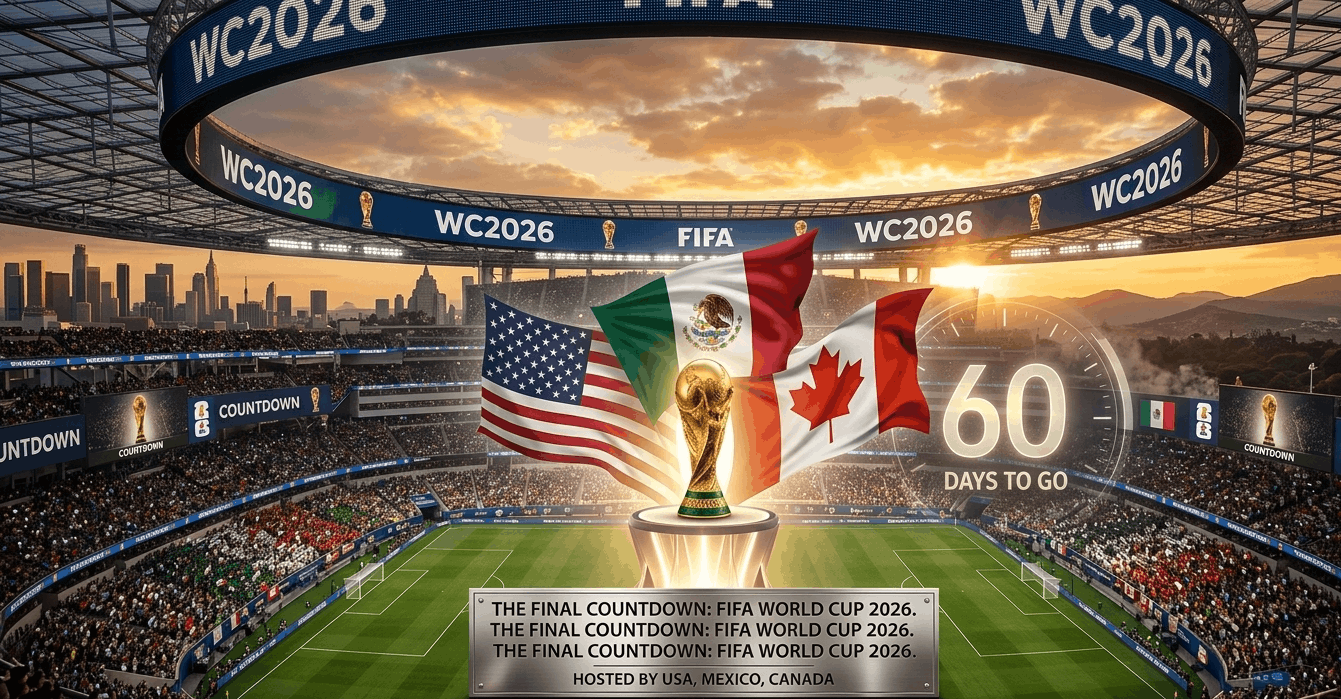
For nearly a century, the FIFA World Cup was a relatively exclusive club. But as we stand here in March 2026, the gates have been flung wide open. The upcoming tournament in the United States, Mexico, and Canada is not just a competition; it is a geopolitical and sporting experiment of unprecedented scale. For the first time, 48 nations will descend upon a single continent, competing in a 104-match marathon that will span 39 days. It is the biggest change in the tournament's history, and as the final international break of the 2025/26 season begins, the weight of that reality is finally sinking in.
Sponsored
DAZN – Watch Every Match
Stream live football on any device
The expansion from 32 to 48 teams has altered the very DNA of international football. We have moved away from the familiar eight-group structure to a complex 12-group format. Critics argued that this would dilute the quality, but the qualifying rounds have suggested otherwise. Emerging nations from Africa, Asia, and Oceania have stepped up their technical game, knowing that the "door to the dream" is wider than ever. This week’s final play-offs are the last hurdle in this journey, and the tension in cities like Bergamo, Cardiff, and Monterrey is proof that the World Cup’s prestige remains untouched, regardless of its size.
The Play-Off Pressure Cooker: Italy’s Redemption or Ruin?
While the giants like Spain, France, and Argentina have already booked their luxury hotels in Miami and Los Angeles, several traditional powerhouses are currently staring into the abyss. The most compelling story of this international break is undoubtedly Italy. After missing the 2018 and 2022 editions, the four-time champions are facing a "do-or-die" semi-final against Northern Ireland in Bergamo this Thursday. For a nation with Italy's pedigree, three consecutive absences would be more than a crisis—it would be a permanent stain on their footballing soul.
Under the fiery leadership of Gennaro Gattuso, the Azzurri are playing with a desperation we haven't seen in years. But they aren't alone in the pressure cooker. Path B sees a resilient Ukraine side taking on Sweden in Valencia, while Path C features a high-stakes clash between Turkey and Romania. These aren't just games; they are national dramas. The expanded format means that falling short this week is even more inexcusable for the established elite. There is no safety net anymore.
The Tactical Challenge: Adapting to a Continent
When the tournament kicks off on June 11 at the iconic Estadio Azteca, the teams won't just be playing against each other; they will be playing against the map. The 2026 World Cup is a logistical behemoth. A team could feasibly play a group-stage match in the cool, damp climate of Vancouver and their next match in the sweltering, humid heat of Miami. This geographical spread is the ultimate test of a manager's squad rotation and a team's physical preparation.
We are seeing a shift in how international managers are building their squads for 2026. The "26-man roster" is no longer a luxury; it is a survival kit. Tactical flexibility is the new currency. Coaches like Luis de la Fuente (Spain) and Gareth Southgate (England) have spent the last two years moving away from a fixed "starting XI" toward a "squad-first" mentality. In a tournament where you might need to win eight matches to lift the trophy—one more than in the old format—depth is the only thing that matters. The high-pressing styles that dominate the Premier League might struggle in the mid-afternoon sun of Dallas or Houston, forcing a return to a more conservative, possession-based approach that prioritizes energy conservation.
The Narrative: The GOATs and the New Gods
Sponsored
Opta Stats Pro
Advanced football stats and data
The sentimental heart of World Cup 2026 is, of course, the "Last Dance." Lionel Messi, now the heartbeat of Inter Miami, will lead an Argentina side that feels like a family defending their patriarch. Across the bracket, Cristiano Ronaldo—whose longevity defies biological logic—is looking to add the only trophy missing from his cabinet. For these two, 2026 is the final chapter of a rivalry that has defined two decades of our lives.
But the headlines aren't just about the legends. 2026 is the moment the "Generation Alpha" stars take the stage. Lamine Yamal, fresh off his NXGN 2026 win, is the face of a Spanish side that many bookmakers have installed as the +400 favorite. Alongside him, players like Jude Bellingham, Kylian Mbappé, and Erling Haaland (leading a dangerous Norway side) are ready to claim the throne. This World Cup represents the passing of the torch in the most literal sense. It is the bridge between the era of the individual icons and the era of the high-system, hyper-technical collective.
The Favorites: Who Holds the Edge in March?
As we analyze the "Power Rankings" entering this final break, Spain holds the top spot. Their technical cohesion is currently unmatched, and their success in the 2024 Euros has given them a psychological edge. However, France remains the "final boss" of international football. With Mbappé at the peak of his powers and a defensive line that resembles a brick wall, they are the most balanced unit in the world.
Don't sleep on the hosts, either. The USMNT has spent the last four years building a "Golden Generation" specifically for this moment. With Christian Pulisic leading a squad that mostly plays in Europe’s top five leagues, the Americans are no longer just "happy to be there." They have the home-field advantage, the athleticism, and a growing tactical maturity that could see them become the tournament's biggest "dark horse."
The Verdict: A Festival of Football Without Equal
The road to 2026 has been long, controversial, and exhausting. But as the countdown clocks in New York, Mexico City, and Toronto tick down to the double digits, all the debates about the 48-team format seem to fade away. Football is coming to North America on a scale we have never seen. From the high-altitude drama of the Azteca to the high-tech spectacle of MetLife Stadium, the world is about to witness a month-long festival that will redefine the sport's global footprint.
This week’s international break is the final deep breath before the plunge. The tactics are set, the stars are aligned, and the final spots are being fought for with every ounce of energy. Whether it ends with Messi’s final bow or Yamal’s first coronation, the 2026 World Cup promises to be the most inclusive, chaotic, and beautiful tournament ever played. The world is coming—are you ready?
Discussion 0 comments
Thoughts on this piece? Comments appear right away — keep it respectful; we remove spam or abuse from the admin panel.
Leave a comment